
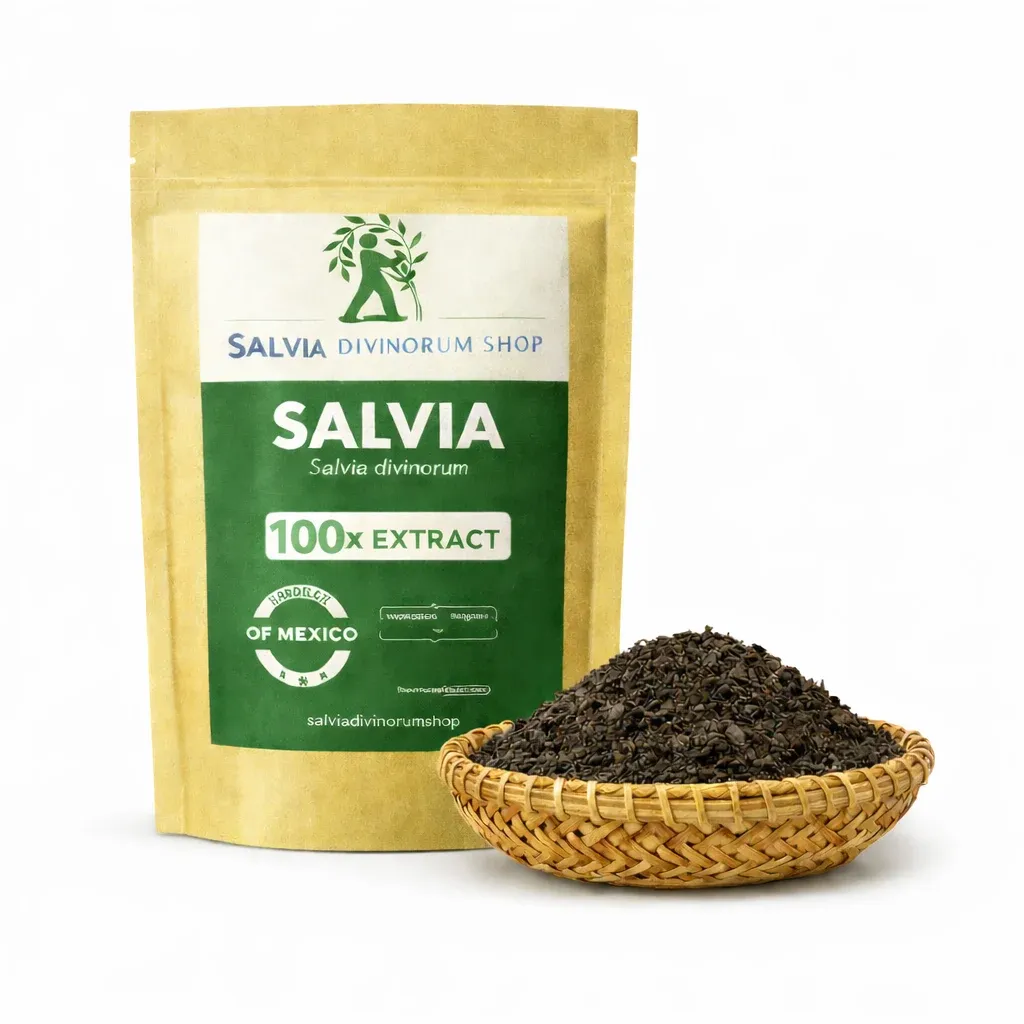
A number such as 10x, 40x or 100x can make a botanical extract look easy to compare.
In reality, that number is only the beginning.
Two products may both carry a 100x label while differing in how clearly they are described, how consistently they are prepared, what information the seller provides, and how the finished material is packaged.
For anyone comparing a salvia divinorum 100x extract, the more useful question is not simply, “How high is the number?”
It is:
What information supports that number?
Quick Takeaway
When comparing high-strength Salvia extracts, focus on five areas:
|
What to Check |
Why It Matters |
|
Botanical identity |
Confirms the product is actually Salvia divinorum |
|
Extract designation |
Explains where 100x sits within the seller’s range |
|
Product description |
Shows whether the seller provides meaningful detail |
|
Packaging and storage |
Helps protect concentrated botanical material |
|
Seller transparency |
Makes claims easier to evaluate |
The multiplier is useful, but it should never be the only thing you compare.
What Does “100x” Actually Tell You?
The “x” terminology used for Salvia extracts is intended to describe concentration relative to plain plant material.
That makes labels such as 5x, 10x, 20x, 40x and 100x useful for organizing a product range.
But there is an important limitation.
These multipliers should not be treated as though they were universally standardized laboratory percentages.
A 100x label tells you how a product is positioned within a commercial extract range. It does not automatically guarantee that every 100x product from every seller contains exactly the same concentration.
That distinction is important for buyers.
Why the Label Needs Context
Laboratory research on commercially available Salvia products has found significant differences between some advertised strength claims and measured salvinorin A concentrations.
More recent analytical work has also shown a wide concentration range between raw plant material and enhanced leaf extracts.
The practical lesson is not that extract labels are useless.
It is that they need context.
When I compare botanical-product listings, I would rather see a seller explain what it is offering clearly than rely on one dramatic number to do all the selling.
A useful page should answer questions around the number instead of simply making the number larger.
Use the “Label, Product, Seller” Test
A simple way to evaluate an extract is to separate the decision into three parts.
1. The Label
What does the seller actually claim?
Look for:
-
the full botanical name
-
the extract designation
-
the package quantity
-
a clear product form
-
realistic wording rather than exaggerated claims
2. The Product
What can you learn about the material itself?
Useful information may include:
-
appearance
-
consistency
-
preparation category
-
package size
-
storage recommendations
3. The Seller
Does the website provide enough supporting information to make the listing understandable?
Check:
-
contact information
-
shipping policies
-
legal restrictions
-
product-specific descriptions
-
clear photographs
-
consistent terminology
Looking at all three areas gives you a much better picture than comparing extract numbers alone.
100x Should Not Be Treated as a Quality Score
This is an important distinction.
Concentration and quality are not the same thing.
A larger extract number does not automatically mean:
-
cleaner material
-
better packaging
-
more accurate labeling
-
better storage
-
better customer support
-
more reliable product information
Think of 100x as a product category, not a review score.
That mindset makes comparison much easier.
Product Descriptions Should Explain More Than Potency
A weak description might say:
“Premium 100x. Extremely strong. Best quality.”
That tells the buyer almost nothing.
A useful description should instead make clear:
-
what plant species is used
-
that the item is an extract
-
how much material is included
-
where it sits in the seller’s extract range
-
what the material looks like
-
how it is packaged
-
how it should be stored
Specific information is more useful than adjectives.
“Premium” is a marketing word.
Package quantity is a fact.
“Powerful” is a marketing word.
Product form is a fact.
The more facts a listing provides, the easier it becomes to compare.
Look at the Entire Extract Range
One surprisingly useful way to evaluate a 100x listing is to look at the seller’s lower-strength products too.
Why?
Because a structured range can reveal whether the seller understands its own product categories.
For example, if a website offers 10x, 20x, 40x and 100x extracts, each page should make the differences understandable.
The descriptions should not simply be copies with the number changed.
Look for a logical progression.
If every product page says exactly the same thing except for the multiplier, there is less information available to support the comparison.
Photography Still Matters
Extract photography cannot prove chemical concentration.
But it can still answer useful questions.
Clear photographs can help show:
-
whether the material is leaf-based
-
the approximate texture
-
product consistency
-
packaging style
-
whether the images appear to represent the actual product category
Be cautious when a listing uses only decorative plant photographs and never shows the extract itself.
A buyer should be able to see what kind of material is being described.
Packaging Becomes More Important With Small Quantities
Concentrated botanical products are often sold in relatively small amounts.
That makes packaging easy to overlook.
It should not be.
A useful package should protect the contents from unnecessary exposure to moisture, contamination and prolonged direct light.
The seller should also provide basic storage guidance.
You do not need an elaborate technical explanation.
A simple, clear statement about how the material is packaged and how it should be kept is already useful.
Check the Quantity Carefully
When comparing high-strength extracts, price alone can be misleading.
A lower-priced listing may simply contain less material.
Always compare:
price + quantity + product form
rather than price alone.
If one listing costs $40 and another costs $60, you cannot meaningfully compare value until you know what quantity each package contains.
This is basic information, but many buyers skip it when a large extract number dominates the page.
What Should You Check Before Buying?
Before you buy salvia 100x extract, take two minutes to answer these questions:
Is the botanical species clearly identified?
Look for Salvia divinorum, not simply “Salvia.”
Is the product clearly identified as an extract?
Plain leaf and concentrated material should not be presented as the same thing.
Is the package quantity obvious?
You should know exactly how much material the listing refers to.
Does the seller explain its extract system?
The site should give enough context to understand what 100x means within its range.
Are there useful product photos?
You should be able to see the type of material being offered.
Is storage discussed?
Basic storage information is a useful sign that the seller has considered what happens after delivery.
Are shipping and legal restrictions visible?
Regulations concerning Salvia can vary by location, so location-specific rules should be checked before ordering.
If most of these questions have clear answers, you have much more information to work with.
Four Red Flags Worth Noticing
1. The number is the entire description
“100x” by itself is not enough information.
2. Every strength has identical copy
Different extract categories should be explained individually.
3. Quantity is difficult to find
Package size should be obvious.
4. There is no product-specific photography
A buyer should be able to see more than a generic Salvia leaf image.
These issues do not automatically prove a product is poor.
They simply mean there is less useful information available for evaluation.
Why Transparency Matters More at the High End
The higher the advertised concentration, the more important clear information becomes.
A 100x listing should not require the buyer to guess what it is, how much is included or what the seller means by its terminology.
Strong commercial pages do the opposite.
They reduce uncertainty.
They explain the product category, state the quantity, show the material clearly and provide relevant shipping, storage and policy information.
That is useful both for experienced buyers and for someone encountering extract terminology for the first time.
FAQ
Does 100x mean exactly 100 times the measured concentration of plain leaf?
It should not be assumed to represent a universally standardized laboratory measurement. Commercial extract terminology can vary between products and sellers.
Is 100x automatically higher quality than 20x or 40x?
No. The multiplier describes a concentration category. Overall quality also involves identification, consistency, packaging, labeling and seller transparency.
Why should buyers look at lower extract strengths too?
A seller’s complete range can show whether its concentration system is explained consistently or whether only the numbers change.
Can photographs verify extract strength?
No. Photographs can show product form and appearance, but they cannot establish chemical concentration.
Why does package quantity matter?
Without quantity, buyers cannot make a meaningful price or value comparison.
Final Thoughts
A 100x label is useful, but it should start the evaluation rather than finish it.
The strongest product pages give the number context.
They tell you what the product is, identify the plant accurately, state the package quantity, show the material clearly, explain the extract range and provide practical information about packaging, storage and shipping.
That creates something much more useful than a potency claim.
It gives the buyer enough information to make a real comparison.
And when comparing concentrated botanical products online, clarity is one of the most valuable quality signals a seller can provide.