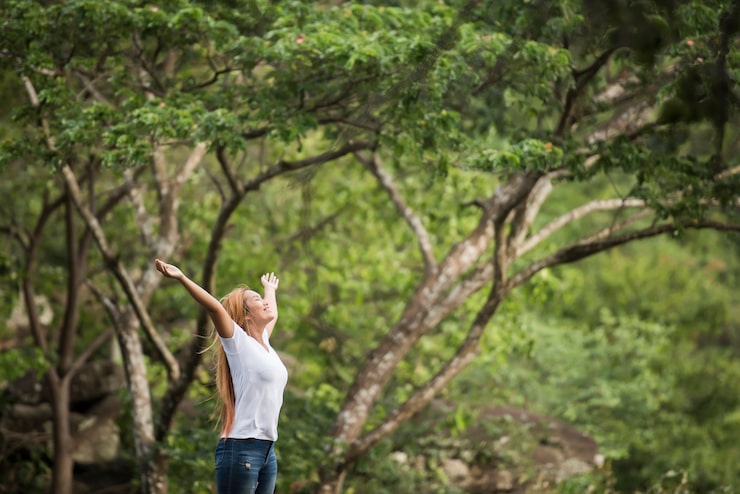
In our increasingly urbanised, digitised world, connection with the natural environment has become rare. Yet research consistently shows that time in nature profoundly supports mental health and personal transformation. Programs like the Hoffman Process often incorporate natural settings, and locations such as a Victorian health retreat or health retreat New South Wales provide the healing power of the Australian landscape as a backdrop for inner work.
The Research on Nature and Wellbeing
The evidence for nature’s mental health benefits has become overwhelming. Studies show that time outdoors reduces cortisol levels, decreases anxiety and depression, improves mood, and enhances cognitive function.
Even brief exposure makes a difference. A twenty-minute walk in a park lowers stress hormones. Viewing natural scenery reduces blood pressure. The presence of plants in indoor spaces improves focus and creativity.
Longer immersions have deeper effects. Multi-day wilderness experiences have been shown to increase wellbeing, promote personal insight, and create lasting positive changes in outlook and behaviour.
Japanese researchers have studied “forest bathing” (shinrin-yoku)—the practice of spending time in forests—and found it boosts immune function, reduces blood pressure, improves mood, and decreases anxiety. The benefits persist for days after the experience.
Why Nature Works
Several mechanisms explain nature’s healing effects:
**Attention restoration**: Modern life demands constant directed attention—focusing on tasks, filtering distractions, processing information. This depletes mental resources. Nature provides what researchers call “soft fascination”—gentle stimulation that engages attention without demanding it, allowing restoration.
**Stress reduction**: Natural environments signal safety to our ancient nervous systems. For most of human evolution, being in nature was normal; urban environments are the novelty. When we’re in natural settings, the stress response naturally decreases.
**Physical benefits**: Time outdoors typically involves movement, fresh air, and exposure to natural light. These basics support physical health, which in turn affects mental wellbeing.
**Perspective shifts**: The scale and beauty of nature can shift perspective. Problems that loomed large seem more manageable against the backdrop of mountains, ocean, or starry sky. This isn’t denial—it’s context.
**Present-moment awareness**: Natural environments draw us into sensory experience. The play of light through leaves, the sound of water, the smell of earth—these anchor us in the present, quieting mental chatter about past and future.
Nature and the Nervous System
Understanding the nervous system helps explain why nature is so healing. Our autonomic nervous system constantly scans for threat and safety, adjusting our physiological state accordingly.
Urban environments often trigger low-level threat responses. Crowds, traffic, noise, artificial light, and the general overstimulation of cities keep many people in a state of chronic mild stress. They adapt and may not notice it consciously, but the body is affected.
Natural environments provide what Stephen Porges calls “neuroception of safety”—cues that tell the nervous system all is well. Open spaces, natural sounds, organic shapes, and the absence of urban stressors allow the system to down-regulate.
This shift from chronic vigilance to relaxation creates conditions for deeper processes. When the body feels safe, resources become available for healing, growth, and transformation.
Biophilia: Our Innate Connection
The biologist E.O. Wilson proposed the concept of “biophilia”—an innate human tendency to seek connection with nature and other living things. This makes evolutionary sense. For millions of years, our survival depended on intimate knowledge of the natural world.
This connection hasn’t disappeared because we now live in cities. The longing for nature persists, even when unrecognised. Studies show that people prefer natural landscapes over built environments, gravitate toward windows with outdoor views, and report greater life satisfaction when they have regular contact with nature.
When we’re cut off from nature, something essential is missing. Reconnection can feel like coming home—to the earth, and to ourselves.
Nature as Teacher
Beyond its direct physiological effects, nature offers teachings that support personal growth:
**Cycles and seasons**: Nature demonstrates that everything has its time. There are seasons of growth and seasons of rest, times of flowering and times of letting go. This wisdom counters the modern demand for constant productivity.
**Impermanence**: The natural world is always changing—weather shifting, creatures moving, plants growing and dying. This direct experience of impermanence can help us accept change in our own lives.
**Interconnection**: Ecosystems demonstrate how everything is connected. Nothing exists in isolation. This perspective can shift how we understand ourselves in relation to others and the world.
**Resilience**: Nature shows remarkable capacity for recovery. Forests regenerate after fires, ecosystems adapt to changing conditions, life persists against remarkable odds. These examples inspire trust in our own capacity for healing.
**Being rather than doing**: Trees don’t try to grow—they just grow. Flowers don’t work at blooming—they simply bloom. Nature models a way of being that doesn’t require constant effort, accomplishment, and striving.
Incorporating Nature into Healing
For those engaged in personal growth work, nature can be a powerful ally:
**Location matters**: Where healing work takes place affects its depth and quality. Natural settings provide better conditions than sterile clinical environments.
**Movement outdoors**: Walking, hiking, or simply sitting outside adds nature’s benefits to whatever practice you’re engaged in.
**Mindful awareness**: Rather than treating nature as backdrop, bring full attention to the sensory experience. Feel the air, notice the light, listen to the sounds. This enhances both the nature experience and present-moment awareness.
**Solitude in nature**: Time alone outdoors provides opportunity for reflection unavailable in busy daily life. Many people report significant insights during solo nature experiences.
**Nature-based practices**: Some traditions use specific natural elements for healing—water for cleansing, fire for transformation, earth for grounding. Even without formal practice, these elements can support inner work.
The Australian Landscape
Australia offers extraordinary natural environments for healing work. The unique landscapes—ancient forests, dramatic coastlines, vast outback, and diverse ecosystems—have their own character.
Indigenous Australians have understood the healing power of Country for tens of thousands of years. While non-Indigenous people may not have the same depth of relationship with this land, spending time in Australian nature can still be profoundly restorative.
The particular quality of Australian light, the sounds of native birds, the smell of eucalyptus—these sensory experiences connect us to where we actually are, grounding us in this place and this moment.
Bringing Nature Into Daily Life
While immersive nature experiences are valuable, regular contact with the natural world is also important. For those in urban environments:
– Spend time in parks and green spaces, even small ones – Bring plants into your home and workspace – Eat meals outdoors when possible – Walk rather than drive when practical – Take breaks to look at the sky, feel the breeze, notice the light – Plan regular excursions to more wild places – Consider a pet, which provides connection with another living being
These small practices accumulate. They maintain connection with nature between more intensive experiences and support ongoing wellbeing.
The Invitation
Nature is always there, waiting. Unlike many forms of healing that require professional support or significant resources, nature is accessible. A walk in the park is free. The sky is visible from anywhere.
This doesn’t mean professional support isn’t valuable—it certainly is. But nature offers something complementary, something that requires no expertise to access. It simply asks for your presence.
In a world that has become increasingly artificial and disconnected, returning to nature is both a personal and a planetary act. What heals us heals our relationship with the earth. What reconnects us to nature reconnects us to ourselves.
The invitation is open. Step outside. Feel the ground beneath your feet. Let your nervous system remember what it is to be an animal on this beautiful planet. From that foundation, transformation becomes possible.