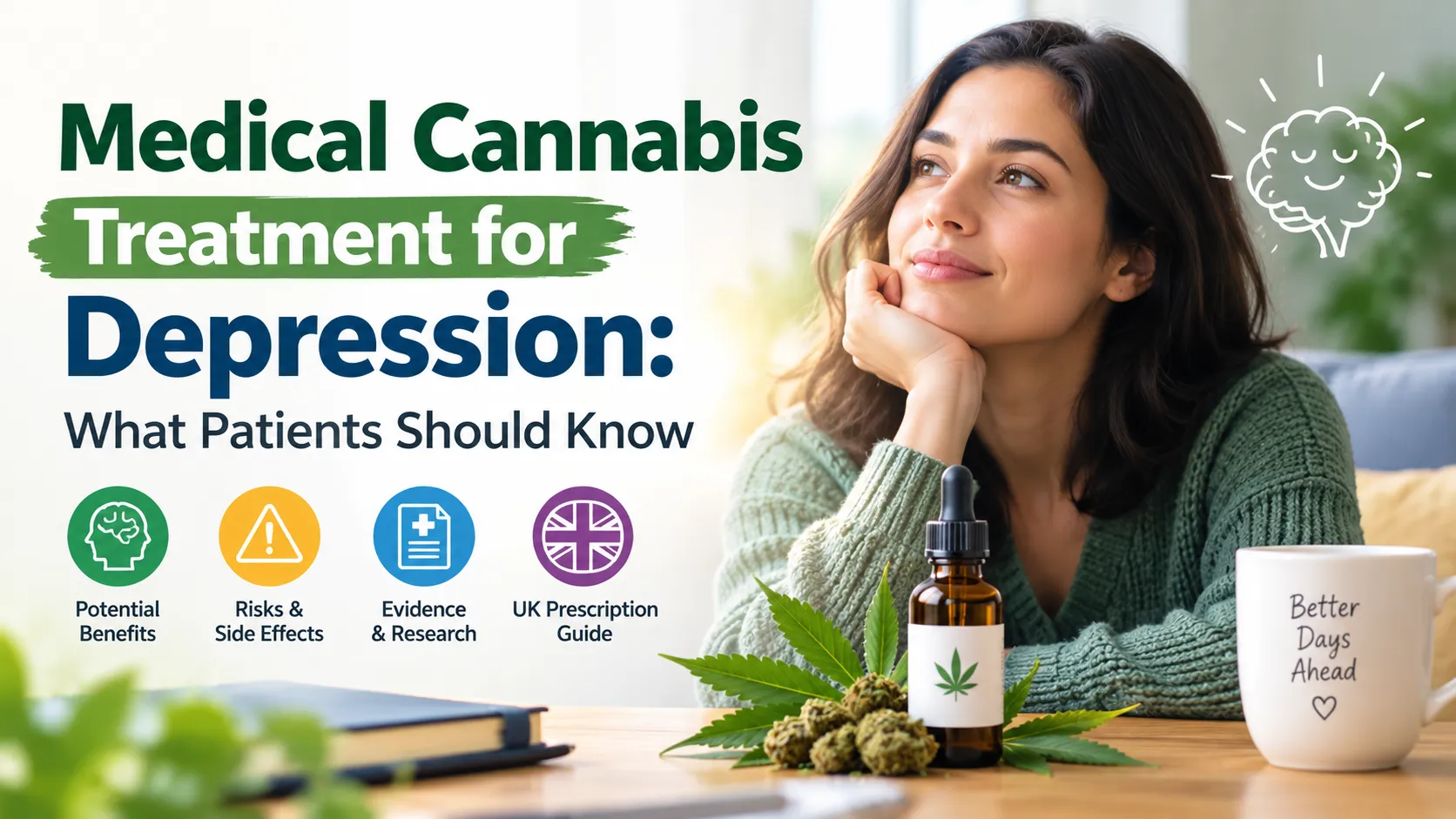
Depression can affect sleep, motivation, concentration, relationships, and the ability to enjoy everyday life. Although established treatments help many people, some continue to experience symptoms or struggle with unwanted side effects.
This has led to growing interest in medical cannabis treatment for depression. Cannabis-based medicinal products are being studied for their potential effects on mood, sleep, and related symptoms. However, evidence remains limited, and they are not an established first-line treatment for depression.
For people exploring alternatives, understanding the research and seeking advice from a qualified specialist are important first steps.
What Is Medical Cannabis Treatment for Depression?
Medical cannabis refers to cannabis-based products prescribed by a qualified clinician for a medical purpose. These products may contain different amounts of cannabidiol (CBD), tetrahydrocannabinol (THC), or other cannabinoids.
Researchers are investigating whether certain formulations could help with symptoms associated with depression. However, potential symptom relief is not the same as proven treatment for depression itself.
A clinician should consider the individual’s diagnosis, medical history, current medication, previous treatments, and potential risks before discussing whether a cannabis-based medicine is appropriate.
Can Medical Cannabis Help With Depression?
At present, there is insufficient high-quality clinical evidence to establish medical cannabis as an effective treatment for depression.
Some observational studies report improvements in symptoms among patients using prescribed cannabis-based products. However, these studies cannot reliably show whether the products caused the improvements. Stronger controlled clinical trials are needed.
The NICE guidance on depression in adults focuses on evidence-based options such as psychological therapies and antidepressant medication, depending on the person’s symptoms and circumstances. Medical cannabis is not listed as a standard first-line treatment for depression.
People considering treatment should therefore have realistic expectations and discuss the uncertainty with their clinician.
CBD and THC: Understanding the Difference
CBD (Cannabidiol)
CBD is non-intoxicating and is being investigated for several possible therapeutic effects. However, evidence does not currently establish CBD as a reliable treatment for depression.
Products sold as CBD oils are not automatically equivalent to prescribed cannabis-based medicines. Their composition, quality, and regulatory status may differ.
THC (Tetrahydrocannabinol)
THC is the main intoxicating compound in cannabis. Its effects vary between individuals, and it can cause unwanted psychological effects, including anxiety, paranoia, and impaired concentration.
A product’s cannabinoid composition can influence its effects and risks. Patients should not attempt to treat depression by experimenting with recreational cannabis or changing doses without medical advice.
What Are the Potential Risks?
Medical cannabis may cause side effects, and suitability depends on the individual and the prescribed product.
Possible risks include:
- Drowsiness, dizziness, or fatigue
- Problems with attention and memory
- Increased anxiety or paranoia
- Changes in mood or perception
- Interactions with prescribed medicines
Tell your clinician about all medications and supplements you take. Do not stop antidepressants or replace an existing treatment without medical advice.
Anyone experiencing worsening depression or thoughts of self-harm should seek prompt professional support rather than relying on cannabis to manage the symptoms.
What Other Treatments Are Available?
Treatment for depression should be tailored to the person’s needs, symptom severity, and previous response to care.
Options may include:
- Talking therapies, such as cognitive behavioural therapy (CBT).
- Antidepressant medication, where clinically appropriate.
- Guided self-help and structured psychological support for some people with less severe depression.
- Specialist mental health care when symptoms are persistent, severe, or difficult to treat.
NICE recommends discussing treatment choices with patients and reviewing whether treatment is working, including monitoring side effects and safety.
Medical Cannabis Prescriptions in the UK
In the UK, the initial prescription of most cannabis-based medicinal products must be made by an appropriately qualified specialist doctor. A prescription depends on clinical judgement and individual circumstances; contacting a clinic does not guarantee eligibility or treatment.
Emerald Health Clinic provides information about medical cannabis treatment for depression. Patients considering an assessment should discuss their symptoms, treatment history, medical background, and expectations with the clinical team.
Final Thoughts
Medical cannabis treatment for depression remains an evolving area of research. While some patients report benefits, there is not yet enough strong evidence to recommend it as an established treatment for depression.
If symptoms are affecting your daily life, speak with a healthcare professional about treatments with established evidence. If your current approach is not helping, a clinical review can identify possible next steps and whether specialist assessment is appropriate.
Frequently Asked Questions
Is medical cannabis approved as a standard treatment for depression in the UK?
No. Medical cannabis is not a standard first-line treatment for depression in UK guidance. Prescribing decisions depend on specialist clinical judgement and the circumstances of the individual.
Can medical cannabis replace antidepressants?
It should not be assumed to replace antidepressants. Speak to your prescriber before changing or stopping any medication.
Is CBD effective for depression?
Current evidence is insufficient to establish CBD as an effective treatment for depression. More high-quality research is needed.
Who can assess me for medical cannabis treatment?
The initial prescription of most cannabis-based medicinal products requires an appropriately qualified specialist doctor. An assessment considers your health history, previous treatments, current medicines, and potential risks.
What should I do if my depression is getting worse?
Contact your GP or mental health service promptly. If you are at immediate risk of harming yourself or cannot keep yourself safe, call 999 or go to A&E. In England, NHS 111 can also direct you to urgent mental health support.